 Elif Çimen
Homemade traditional kimchi (Korean fermented vegetables)
Napa cabbage, gochugaru and a little patience: a traditional kimchi in your own jar that tastes best from the second week on.

- Prep
- 40 min
- Cook
- 5 min
- Servings
- 10
- Effort
- medium
In Korean medicine and food culture, kimchi is both a wonderful source of probiotics and a delicious fermented food that supports the immune system. A traditional kimchi recipe with exactly the right texture, which you can easily make at home:
Ripening time
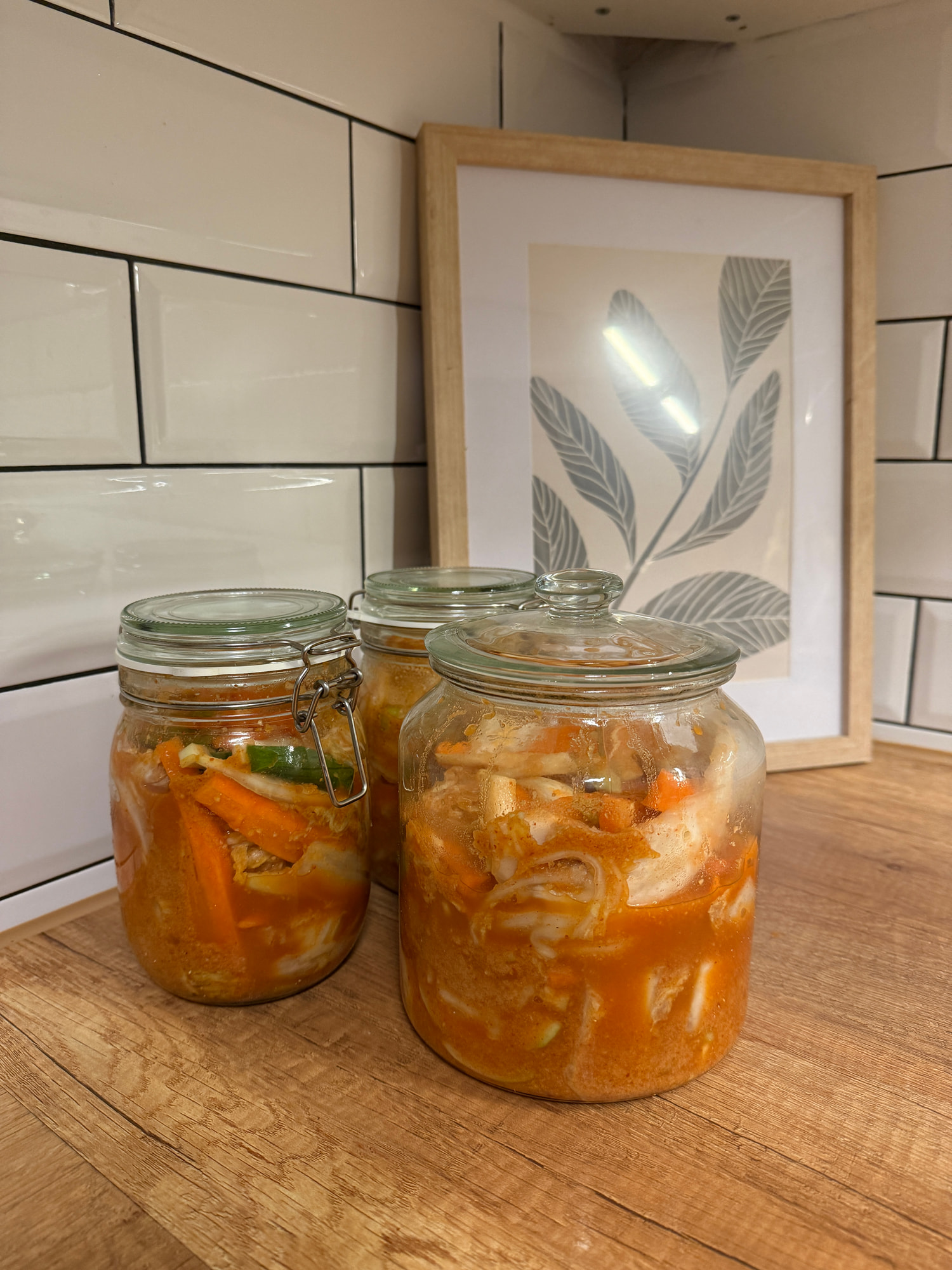
- Room temperature: Keep the jar at room temperature for 1 to 3 days, somewhere out of direct sunlight. When bubbles start to form, fermentation has begun.
- Fridge: Then move the jar to the fridge for the ideal taste and texture. It carries on fermenting slowly there. From the 2nd week it reaches its best flavour and stays fresh for months.
Enjoy!
Ingredients
- Main ingredients:
- 1 large napa cabbage (Chinese leaf)
- 1/2 cup rock salt (for rubbing into the cabbage and letting it stand)
- 1 medium carrot (cut into julienne / matchsticks)
- 1 bunch spring onions (coarsely chopped)
- 1/2 radish (preferably Korean radish or white radish, cut into matchsticks)
- For the kimchi paste (the rice-flour porridge):
- 2 tbsp rice flour
- 1.5 cups water
- 1 tbsp brown sugar (or white sugar)
- 1/2 cup Korean chilli flakes (Gochugaru) – if you are using ordinary chilli flakes, watch the heat and use less.
- 1/4 cup fish sauce (or soy sauce for a vegan alternative)
- 6-7 cloves of garlic (grated or crushed)
- 1 tsp fresh ginger (grated)
- 1/2 onion (puréed)
Method
- Cut the napa cabbage lengthways into 4 equal pieces. Sprinkle plenty of rock salt between the leaves, especially onto the firm stem parts.
- Put the cabbage into a large bowl and leave it for about 1.5 to 2 hours. Turn it every 30 minutes so that the salt spreads evenly.
- Once the cabbage has softened and bends easily, wash it at least 3 times in cold water to rinse off the excess salt, and let it drain thoroughly in a colander. (Draining it well is very important, so that your kimchi does not turn watery.)
- In a small saucepan, stir the rice flour into the water and cook over medium heat until it thickens (it should reach the consistency of pudding).
- As soon as it starts to boil, add the sugar, stir for another minute, take the pan off the heat and leave it to cool.
- Stir the grated garlic, the ginger, the puréed onion, the fish sauce and the Gochugaru (chilli) into the cooled rice-flour porridge and mix until you have a smooth paste.
- Add the chopped carrot, radish and spring onions to this red paste and mix everything together well.
- Put on kitchen gloves. Spread the spicy paste generously between the leaves of the drained cabbage, one leaf at a time.
- Fold the coated cabbage pieces over and press them firmly into a clean, dry glass jar so that no air is left. Leave at least 2-3 fingers of space at the top for fermentation.
- Close the lid of the jar tightly.