 Elif Çimen
Language
In the language you think about food in
Sessions in German, Turkish or English — and why that is more than a convenience.

Food is one of the few subjects almost everyone thinks about in their first language, even when they live the rest of their life in a second one. The words for fullness, for appetite, for “that sits heavily on me” are learned early and rarely translated.
In a session that means: someone asked to describe in German what happens after eating often describes something vaguer than they mean. Not because their German is not enough, but because the sensation is filed in another language.
So we can switch mid-sentence. I do not translate alongside; I simply listen in both. For many people it is the first time in a practice.
The written summary comes in whichever language you would pass it on in — which is often not the language we spoke.
More about me
DDG Diabetes Congress 2026
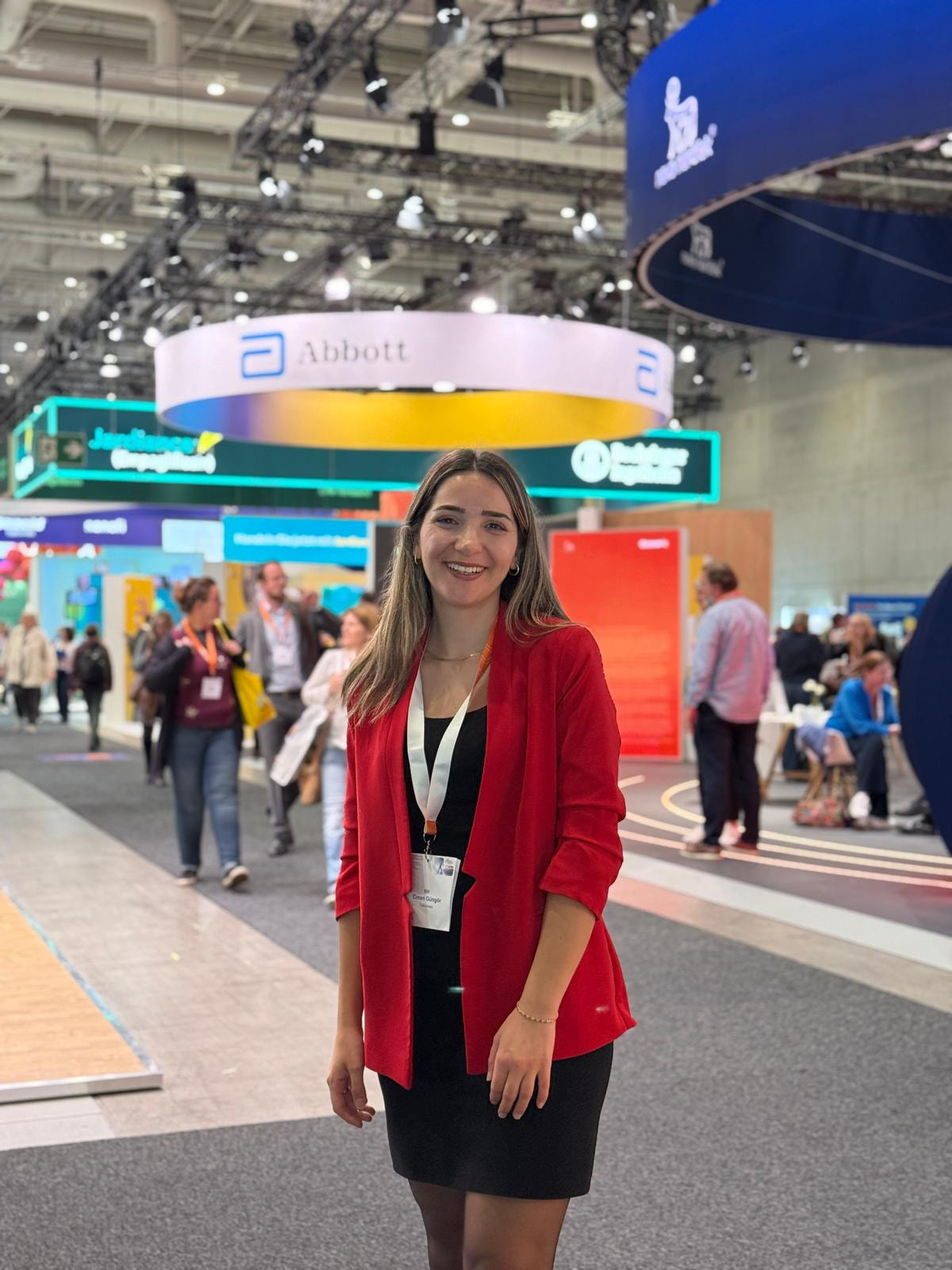
The 60th DDG Diabetes Congress in Berlin focused on modern therapies, prevention and digital technology – and, for me, on how all of it reaches patients’ everyday lives.
Read moreBetween two kitchens
Why nutrition advice that does not know the Sunday table misses what actually happens.
Read moreWhat I do not do
No target weights, no lists of forbidden foods, no diagnoses. What that means in a session.
Read more